Virus-host interactions in influenza virus entry
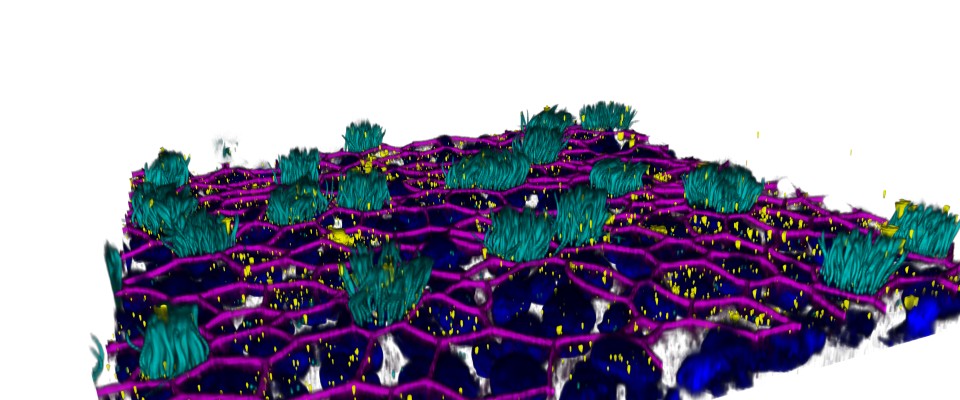
Another arm of our research focuses on identifying and characterizing host cell factors involved in the entry of influenza viruses. Using genetic perturbation and proteomic approaches, we uncover host proteins that facilitate viral entry and define their mechanisms of action through targeted assays. This work has led to the identification of proteases and kinases that can be inhibited by small molecules, highlighting potential antiviral strategies and advancing our understanding of early virus–host interactions1, 2, 3, 4.
More recently, our focus has expanded toward the role of host factors in zoonotic transmission. By applying proximity labelling approaches, we have identified candidate receptors involved in influenza virus internalization, which are under investigation5. In parallel, we use single-cell transcriptomics of primary airway cultures infected with human and avian influenza strains to define host responses at high resolution. These studies reveal cell type–specific signatures and differences in host requirements between viruses, providing insights into the adaptations that accompany cross-species transmission and identifying new avenues for therapeutic intervention.
Referencess:
- Konig R, et al. Human host factors required for influenza virus replication. Nature 463, 813-817 (2010).
- Tripathi S, et al. Meta- and Orthogonal Integration of Influenza "OMICs" Data Defines a Role for UBR4 in Virus Budding. Cell Host Microbe 18, 723-735 (2015).
- Hunziker A, Glas I, Pohl MO, Stertz S. Phosphoproteomic profiling of influenza virus entry reveals infection-triggered filopodia induction counteracted by dynamic cortactin phosphorylation. Cell Rep 38, 110306 (2022).
- Yanguez E, et al. Phosphoproteomic-based kinase profiling early in influenza virus infection identifies GRK2 as antiviral drug target. Nat Commun 9, 3679 (2018).
- Sempere Borau M, et al. Proximity labelling of internalizing influenza A viruses reveals a role for neogenin in virus uptake. PLoS Pathog 21, e1013338 (2025).